Women writing women smashing boundaries

www-full-banneraml

Some of my favourite authors and self-publishers have banded together to promote their work as part of a box set. It looks absolutely stunning, and yes I’m rushing off to grab my own copy of this limited edition e-anthology.

Self-publishing authors and Alliance of Independent Authors members Jessica Bell, Roz Morris, Orna Ross, Joni Rodgers, Kathleen Jones, Jane Davis, and Carol Cooper all feature in ‘The Magnificent Seven’.

You can read more about this bold publishing experiment over at the blog of participating author Roz Morris.

Collectives and coalitions are shaping up as a serious marketing force for professional self-publishers – I’m keen to see how this works out for the authors involved in terms of boosting book sales and general visibility. I’m sure they’ll be blogging about it!

049b3c_9f3a93f01c034658bb5d566893679e11.jpg_srz_577_503_75_22_0.50_1.20_0.00_jpg_srz

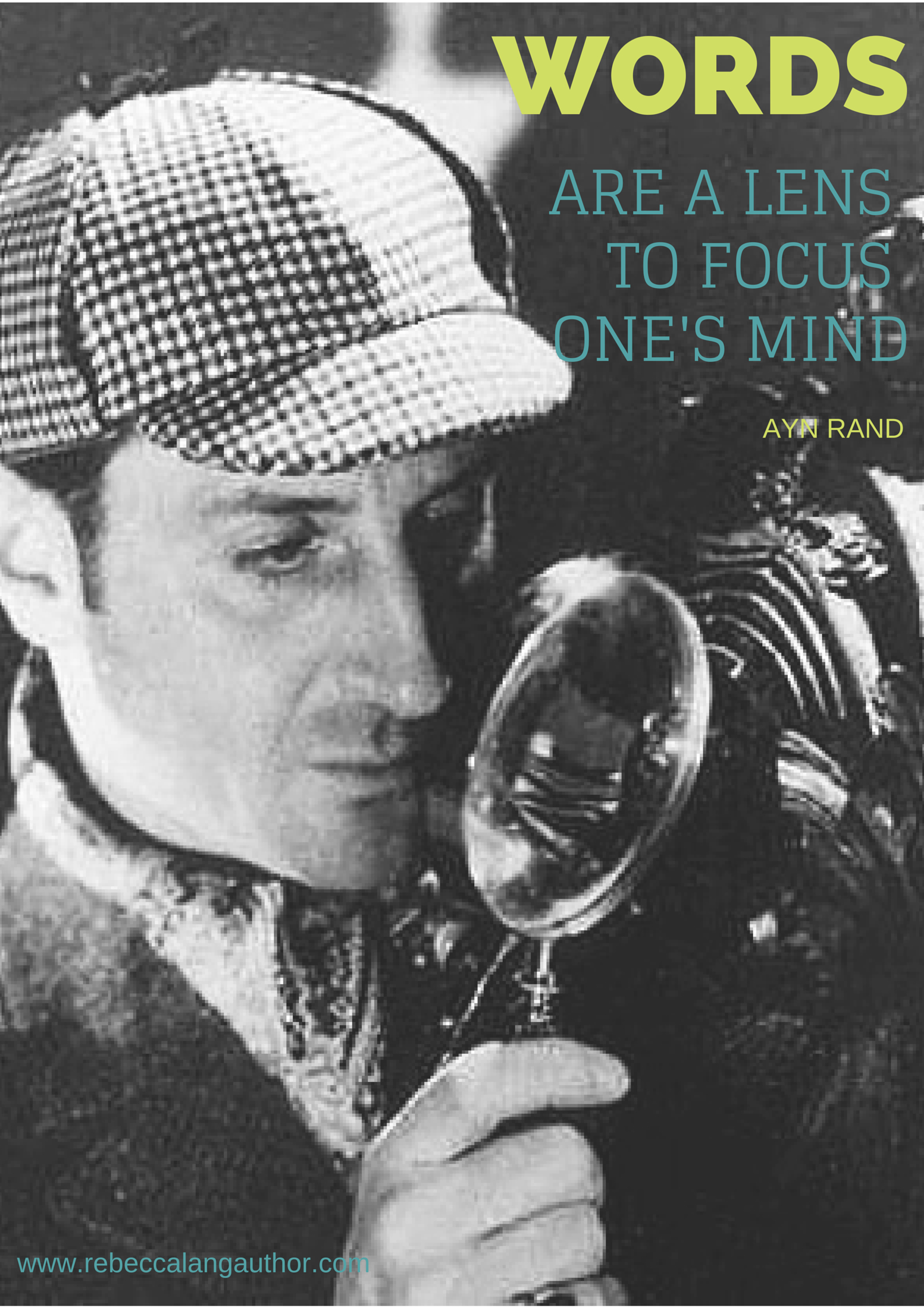
Words are a lens to focus one’s mind

sherlock

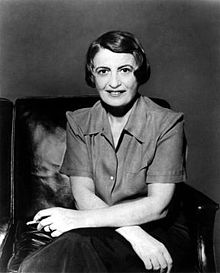
‘Word are a lens to focus one’s mind’. Ayn Rand penned this, and yet I feel it could so easily have been uttered by one of my all-time favourite detectives, Sherlock Holmes.

The super-smart Russian-American novelist and libertarian heroine might have enjoyed the Baker Street detective’s piercing intellect (or not – Holmes didn’t really have a way with women).

As I write this post I’m reminded, yet again, that Atlas Shrugged (Rand’s most famous work) is still gathering dust on my reading pile. One step closer…

220px-Ayn_Rand1

Why I love my library

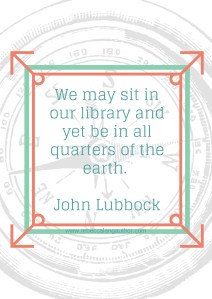
lubbockquote

John Lubbock really knew what he was on about. Isn’t this a great quote? I love it. I want it tattooed on the wall of my next house, in the room that will be my very own private library.

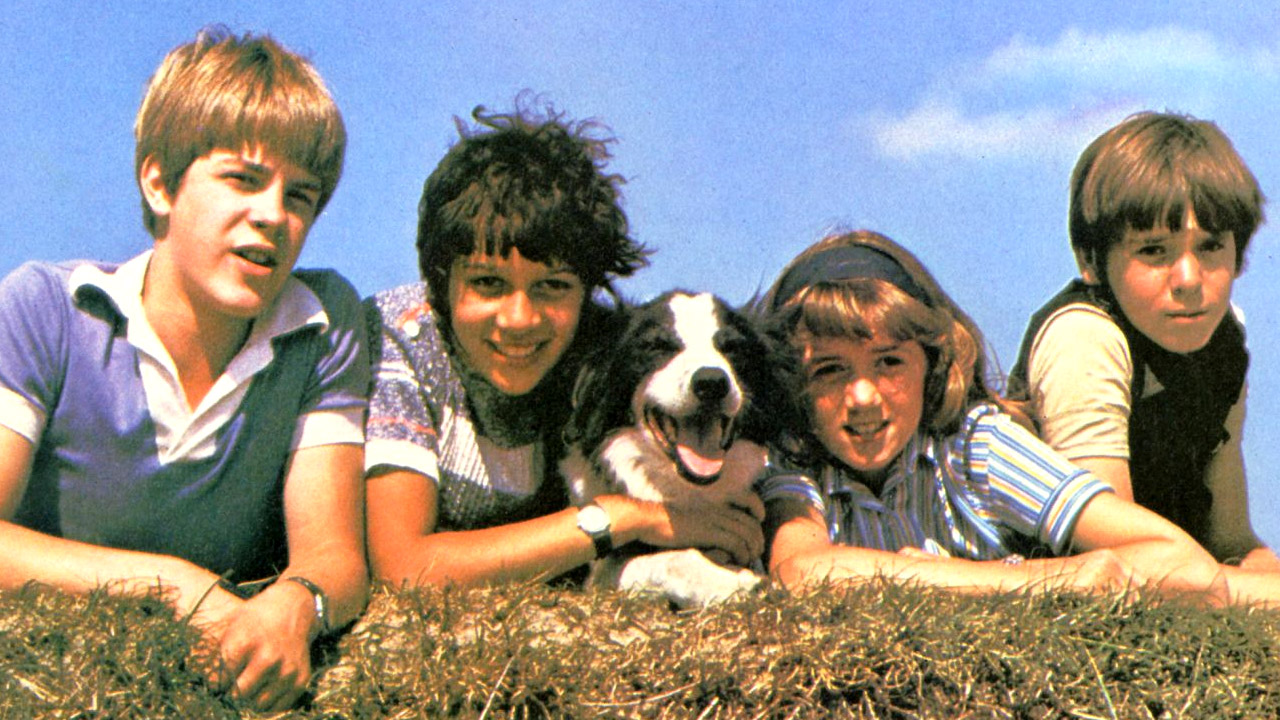
I was a wee little thing when I visited my first library. I remember it well. It was in the hallowed halls of St Joseph’s primary school in O’Connor in Canberra, Australia. It was the late 1970s, so the children’s reading corner was very traditional – lots of Enid Blyton’s Famous Five and Secret Seven, Herge’s Tin Tin, Goscinny and Uderzo’s Asterix, Jeff Brown’s Flat Stanley – and featured an enormous tube cushion in the shape of a giant snake. I loved that library, and I remember the competition was fierce for the good books, particularly the ones featuring Julian, Dick, Anne and George (and Timmy the dog!). The boys in particular were quick to swoop on any Tin-Tin and Asterix books. For my money, mysteries were  the way to go. I was green with envy over my friend Jo’s collection of original hardcover Famous Five books, which she had inherited from her mother. It was hard going trying to find all of the books and read them in order through the library, and yet the library offered me something I’d never had before: reading choices.

70412-4

My next most memorable library was on the other side of the world at Hunters Woods Elementary School in Reston, Virginia, USA. You wouldn’t get a more different collection of children’s books, which isn’t surprising given how culturally different the two countries were in the 1980s, a time when you couldn’t even watch American ads on Australian TV. It was here I discovered the likes of Joan Aitken’s Wolves of Willoughby Chase, Norton Juster’s The Phantom Tollbooth, and Louise Fitzhugh’s charming Harriet the Spy (which inspired me to carry around a similar notebook of frank and fearless observations for a while – to my detriment).

I also discovered Judy Blume, a then (and probably still) controversial author. She was your go-to girl for all the gory details about periods, first bras and kissing boys. Reading ‘Are You There God? It’s Me, Margaret’ was a rite of passage.

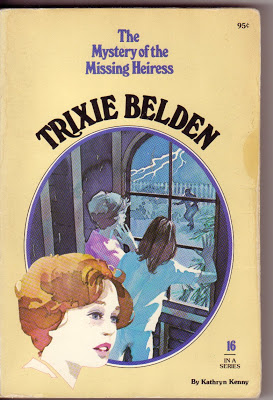
When I wasn’t at school, I begged my father to take me to the Reston Regional Library, where I would walk out with armfuls of books. The school holidays were heavenly. A keen reader, I’d churn through most of them in a week and insist on another trip. It was cheap entertainment, considering a few years earlier I’d been badgering my father to buy me endless copies of Nancy Drew, Hardy Boys and Trixie Belden books at around $6 a pop (big money then, and when you read them as quickly as I did).

TRIXIE-BELDEN-16-PB-OVAL-THE-MYSTERY-OF-THE-MISSING-HEIRESS

There have been other libraries since then. Other books. Many other books. But those three libraries and their contents shine in my memory as havens for the young me, a bookish child, and opened up a world of joy, adventure and knowledge.

These days I tend to buy my books instead of borrow them. Some books I read straight away, others I shelf for a rainy day. I buy new, I buy old. I buy mass market books, and I hunt down rare and unusual tomes. I buy locally, interstate and internationally. I buy in shops and I buy online.

I almost never give away books and, after a few bad experiences, I absolutely never lend them. My collection gives me great joy. I still have books that I owned as a child – adventure stories, fairytales and compendiums of myths and legends – precious touchstones that still evoke feelings of delight and wonder. Books have proven to be constant friends to me, and even in my darkest hours (and I’m fortunate in that I’ve never had too many of those) they have been my crutch, my confidante. To live without books in my life would be akin to giving up food or water.

My fondest wish as a child was to have my own library. My very own shelfed sanctuary heaving with every kind of topic or genre that has ever grabbed my fancy, well kept and respected tomes, gently loved and, post-read, occasionally caressed. The air thick with the scent of ageing pages. I have that now – a few thousand books that line the walls of my old 1940s cottage, roughly ordered by subject, spines rebelling against anyone’s attempts to colour coordinate to any interior decor whim. This isn’t a show-pony library, it’s a reader’s library.

Books taught me about the importance of storytelling. It’s a love affair that has defined my career choices and hobbies – first as reader, then as journalist, book reviewer, editor, and writer – so it’s little wonder that I share my house with so many stories. I’m not a hoarder, and I’m not a collector. I’m merely in tune with my true nature (and yours), the primal need we all have for sharing and finding meaning in the human experience.

For telling stories.

Reynolds Price said: “A need to tell and hear stories is essential to the species Homo sapiens – second in necessity apparently after nourishment and before love and shelter.”

‘Hey lady!’ I hear you say, ‘haven’t you heard of ebooks?’

Well yes, yes I have. But if someone pulls the plug on the Internet tomorrow or Amazon.com crashes, or your e-reader runs out of juice, your ebooks will be floating in the ether. My books will be on the shelf, ready to read.

In my library.

Almost anyone can be an author…the business of writing

typoquoteMILNE

It was author Alan Alexander Milne (aka A.A. Milne of Winnie the Pooh fame) who said ‘almost anyone can be an author; the business is to collect money and fame from this state of being’.

Milne was savvy enough to know that visibility and sales go hand in hand for successful authors. You can write it, but that doesn’t mean anyone is going to read it.

For me, this comment very much sorts the career writers from the hobbyists. Anyone can write a book and sell it with varying degrees of success. But career writers who are dedicated to writing, and selling, multiple books must view their own publishing ambitions as an enterprise if they want to succeed and reach their potential. These writers are in the business of writing. And people are in business to make money.

The business side of writing includes marketing your work with a view to increasing your profile in the hope it will interest people in your books and lead to sales. Marketing plays a big role, a HUGE role, in an author’s business. When you’re an author, you’re always marketing your books.

Fortunately for Milne, he had a head start in the way many moderately successful journalists and humorists do, in that he already had a highly visible platform with his employer Punch magazine. It wasn’t the Internet, but Punch was ubiquitous at the time and incredibly popular.

winnie-the-pooh-original-drawing-with-quote

Milne’s name is now synonymous with his Winnie the Pooh books, but his breadth and talent as a writer was by no means confined to children’s literature. He also carved out a name as a writer of screenplays, adult novels, poetry, humour, and military books. That his name would for perpetuity be tied to a sweet little yellow bear who loved honey might seem a disservice to a man who wrote so well and so widely, but to be remembered beyond your own lifetime is a feat in itself.

At the end of his writing career, Milne had achieved wealth and fame, and enduring appeal: “I suppose that every one of us hopes secretly for immortality; to leave, I mean, a name behind him which will live forever in this world, whatever he may be doing, himself, in the next.”

A.A. Milne was in the business of writing.

A_a_milne

Some ALLi news…

I was one of the featured guest bloggers over the holiday period for the Alliance of Independent Authors (ALLi) on its excellent and widely read Self Publishing Advice blog on the subject of book covers.

You’ve already seen me wax lyrical on this blog about the importance of a good cover. I’m pleased more independent authors are stepping up to the challenge of leveling the playing field between independent and trade published books.

In other news, I was recently asked to step up and be an ALLi Ambassador for the Australasian region, along with fellow ‘indie’ Elisabeth Storrs, which I readily agreed to – I think sharing knowledge and experience is one of the great benefits of ALLi membership, and I’m more than happy to contribute some time and energy.

If you’re curious about ALLi’s work, click on the link below and read about some of the many benefits available to independent authors.

Alliance of Independent Authors /

I hope, on reflection, everyone has had a productive 2014 – whether that involved honing your craft through learning or writing, drafting a major piece of work, or publishing and marketing the fruits of your labours.

Here’s to a cracking 2015!

Agatha Raisin’s Quiche of Death hits the small screen

Screen shot 2014-12-28 at 11.00.23 PM

I’m beyond excited about this, truly.

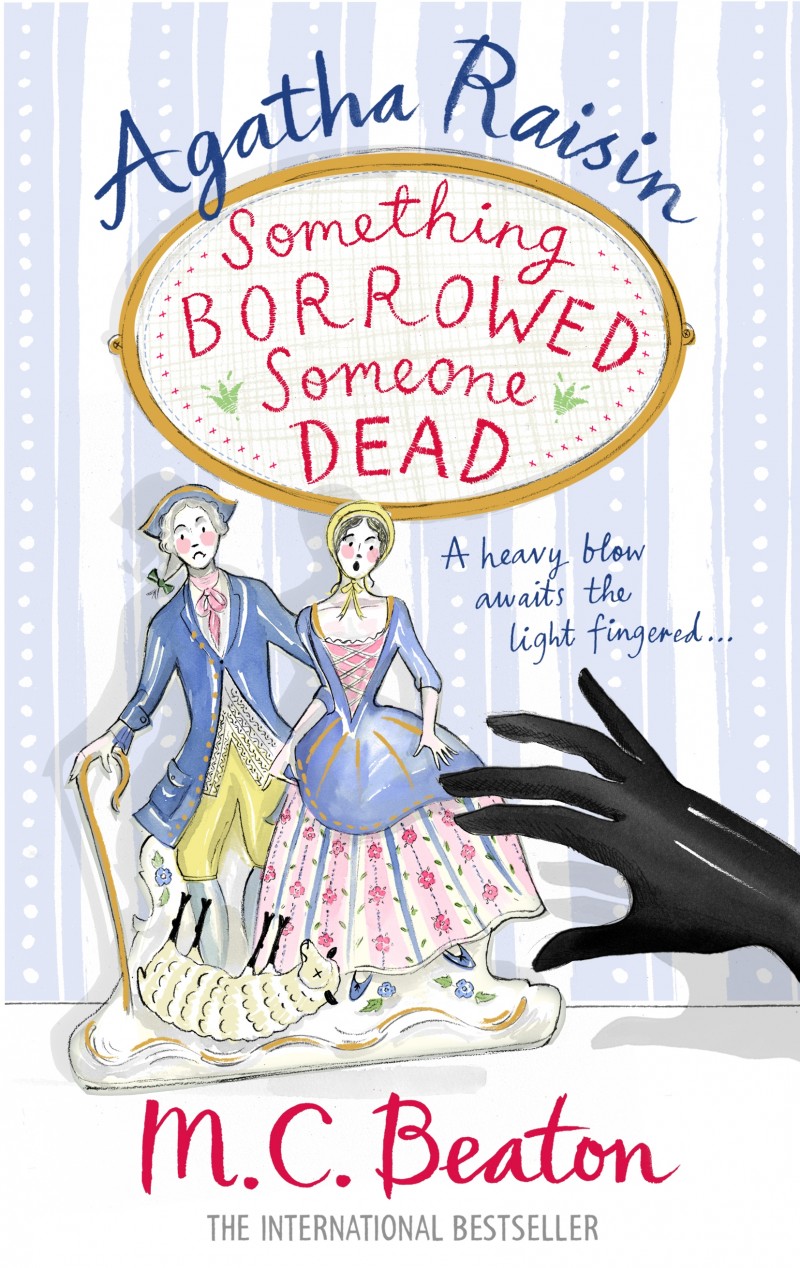
The Agatha Raisin books are a guilty pleasure of mine, and the annual release of a new book is keenly anticipated.

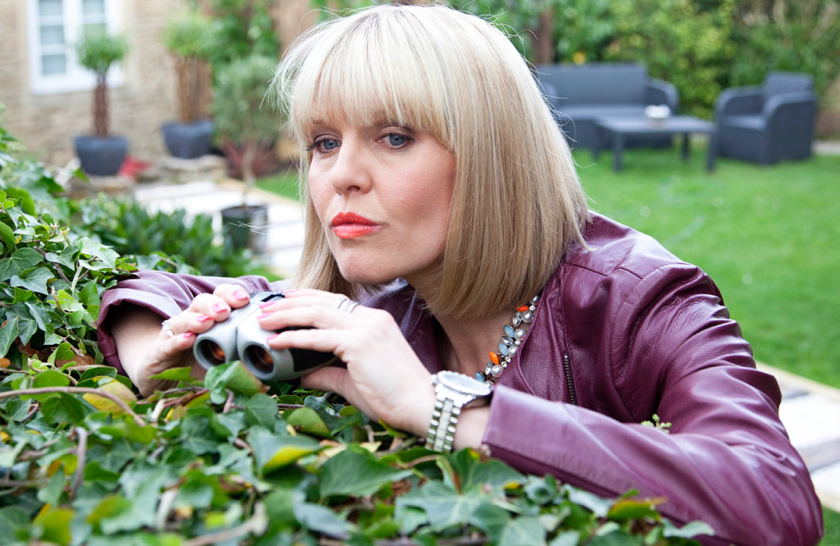
So put yourself in my shoes, and imagine the delirious joy I am feeling knowing actress Ashley Jensen will soon be portraying the grumpy ex-PR hack turned private detective!

agatha-raisin

OK, Ashley is blonde, and slim – a far cry from the more portly brunette that is book Agatha – but her comic timing will, I’m confident, bring the taciturn detective to life on television.

You can watch the trailer here:

http://www.sky.com/tv/show/agatha-raisin/video/trailer

Sadly for those of us in the Southern Hemisphere, we’ll have to wait for the likes of the ABC to acquire it, as it is only screening in the UK this Christmas.

I’m certain, however, it will be worth the wait – after all, it has Agatha creator Marion Chesney’s (aka M.C. Beaton) blessing!

The Tasmanian Tiger lives on in new anthology

484834_810918928925678_1995098797_n I’m please to announce my latest publishing project has finally been given its wings and is flying off the shelves (I hope) – some of you who have been extra good might even end up with a copy in your Christmas stocking!

The Tasmanian Tiger: Extinct or Extant? has been a lengthy project from initial idea to completion, largely because I worked directly with 12 authors and a graphic designer, so it was challenging to marshal the contents together and finesse the final product.

I could almost write a whole blog on conceptualising, organising and publishing an anthology, but I already have another two well underway. Let’s see how I feel after that – I may yet have more lessons to learn.

We’ve already received a lot of support from well-known bloggers in promoting the book, and it has already made the ‘Top 20′ list of US cryptozoology writer and blogger Loren Coleman. Huzzah!

Does the Tasmanian Tiger still roam the island state, parts of the Australian mainland, and the northern land mass of Irian Jaya-Papua New Guinea? Well, you might just have to read it to find out.

Judging books by their covers…

Screen shot 2014-11-20 at 11.09.37 PM     Screen shot 2014-11-20 at 11.09.48 PM     Screen shot 2014-11-20 at 11.10.00 PM

I confess I have an artistic streak. Don’t get me wrong, I’m not claiming to be any good – I just have a need for self-expression that occasionally goes beyond the printed word.

In my past life I designed newspapers and magazines, and frequently created the kind of symmetry and modular layouts that helped make reading a daily joy for readers. These are the sort of design skills no one ever notices because they take it for granted that papers or magazines have always been easy to read.

Maybe I should have been a graphic designer. Or not (as you see above, my skills are limited in this area!).

So what does this have to do with publishing?

Nearing the completion of my first self-published book I decided to have a stab at designing the book’s cover. I had seen some covers that I really liked and set my mind to replicating a couple of them – an eye-catching tabloid-style of cover with block colours and arresting images, and a darker more academic effort. I’ve included both in this post.

If it was any good, I reasoned, I would have saved myself some money and added an extra string to my bow (writer, editor AND book designer!). As it was, it really wasn’t very good at all – but at the time I thought it was Magnificent! Genius! A Work of Art! That was until I showed a graphic designer friend Tim Hartridge who politely considered it. He never said ‘Oh sweet Jesus this is an abomination!’, but he did design something much, much better.

I’m not above sharing my book cover boo-boos for a few reasons:

1. To show you that yes, of course it is possible to design your cover (it might even rock – or not).

2. Creating your own cover can occasionally help a graphic designer with their brief (however in this case it really didn’t).

3. Graphic designers always do it much, much better!

In the book-buying world, books are often largely judged on the quality of their covers. While we prefer to think intellectual rigour and well-crafted writing triumphs when it comes to selling books, just as frequently readers will walk out of a bookshop with a so-so written mass-market novel that caught their eye because of the pretty pictures and flowery fonts. Yes, really.

When you produce a book for publication there are many steps to refining and polishing the raw product before it is ready to be shared with the world – and this includes how the words are arranged on the page, and the front and back cover.

If you’re smart you will hire and editor to pick up all of your mistakes – and there will be many, no matter how clever and careful a writer you are.

And if you’re really smart, after spending so much time and energy writing, and then having your work professionally edited, you will make another really important investment. You will hire someone to create a whiz-bang cover for your book. A traffic-stopping ‘look at me’ cover of epic proportions you would be proud to hang as a poster on your wall – or in a bookshop window.

Many graphic designers offer additional services such as laying out the inside of the book, the creation of book marks, flyers and website design to create a strong connection between your marketing materials and your book.

This doesn’t have to cost a lot. There are a lot of people offering cheap book covers – even cheaper if you’re publishing only in the e-book format. However if you’re publishing a book I’d recommend at this stage to pay for covers in all formats.

Graphic designers will often present you with several concepts but you can save a lot of time by indicating the type of cover you want – whether you do this by referring them to book covers you like, or have a stab at designing something is up to you.

Paying for the services of a good graphic designer is part and parcel of investing in yourself, and getting your readers to invest some time in getting to know your writing.

I’m very pleased to note that the ranks of self-publishers hiring talented graphic designers is on the increase. I have no firm statistics to back up this assertion, but anecdotally I can tell you that the calibre of the book covers I am seeing, primarily those created by contractors for my fellow Alliance of Independent Authors members, is outstanding.

Self-publishing is coming of age in more ways than one. Feel free to judge the covers – those who are seriously committed to publishing excellence are leading the way with professional products that rival their traditionally published peers.

Well played, self publishers, well played.

So what is an ethical author?

Alliance of Independent Authors /

Just what is an ethical author?

My first thought, and possibly yours, is one that doesn’t stoop to low tricks such as ‘sock puppet’ reviews (fake accounts run by the same person – often the author of the book in question – with the intention of falsely inflating its popularity with a view to increasing sales) and plagiarism – but that’s only part of what makes an ethical author.

This year ALLi lead the way once again by creating a program to promote ethics in publishing with the catchy hashtag #ethicalauthor (feel free to use it on Twitter if you subscribe to the thinking behind it).

The guiding principle is to put the reader first by agreeing not to mislead them, and to always engage in courteous and professional behaviour.

This also means conduct as well – such as refraining from responding to that nasty puerile online Amazon review (“Book arrived late. It was OK.” **). A tough one, admittedly, but if you’re going into business as an author you need to develop a thick skin.

For the curious, the Ethical Author Code principles include:

  • Courtesy: I behave with courtesy and respect toward readers, other authors, reviewers and industry professionals such as agents and publishers. If I find myself in disagreement, I focus on issues rather than airing grievances or complaints in the press or online, or engaging in personal attacks of any kind.
  • Aliases: I do not hide behind an alias to boost my own sales or damage the sales or reputation of another person. If I adopt a pen name for legitimate reasons, I use it consistently and carefully.
  • Reviewing and Rating books: I do not review or rate my own or another author’s books in any way that misleads or deceives the reader. I am transparent about my relationships with other authors when reviewing their books. I am transparent about any reciprocal reviewing arrangements, and avoid any practices that result in the reader being deceived.
  • Reacting to reviews: I do not react to any book review by harassing the reviewer, getting a third party to harass the reviewer, or making any form of intrusive contact with the reviewer. If I’ve been the subject of a personal attack in a review, I respond in a way that is consistent with professional behaviour.
  • Book Promotions: I do not promote my books by making false statements about, for example, their position on bestseller lists, or consent to anyone else promoting them for me in a misleading manner.
  • Plagiarism: I know that plagiarism is a serious matter, and I don’t intentionally try to pass off another writer’s words as my own.
  • Financial ethics: In my business dealings as an author, I make every effort to be accurate and prompt with payments and financial calculations. If I make a financial error, I remedy it as soon as it’s brought to my notice.
  • Responsibility: I take responsibility for how my books are sold and marketed. If I realise anyone is acting against the spirit or letter of this Code on my behalf, I will refer them to this Code and ask them to modify their behaviour.

As an ALLi member, you also agree to a Code of Standards that should inform everything that you do as an independent author/publisher. I’m including them here because I think they’re relevant. These include:

  • Collaboration: As an ALLi Author Member, I recognise that “self” publishing and “independent” authorship are relative terms and that almost nobody who publishes a good book works alone. I partner with other writers,editors, designers, publicists, distributors, booksellers and readers with courtesy, in a collaborative manner.
  • Professionalism: I perform my responsibilities in the publication process in a professional and timely way, providing clear guidelines and thoughtful input to copyeditors, designers, booksellers and all partners, while respecting the expertise of others.
  • Community: I am an active part of the Alliance (ALLi’s) community and the wider self-publishing, writing and reading community, freely offring support and the benefit of my experience.
  • Engagement: I fully engage with the editorial process – including working with editors in framing and shaping my manuscript, appropriately revising and responding to professional copyediting.
  • Editorial & Design: Out of respect to my readers, I aim for as high a quality a publication as possible.
  • Scholarship: I am accurate, to the very best of my ability, in all facts and accounts in my publications. I follow publishing standards in crediting all sources of information, obtaining permission to use material for which permission is needed, and avoiding plagiarism or libel.
  • Marketing: In reaching out to readers, I do not bombard, spam or force my writing upon others.
  • Advocacy: I am an active advocate for the empowerment of writers through self-publishing. I am open and honest about my own experiences and work to benefit and grow our community and extend the possibilities for all writers.
  • Improvement: I seek out the training, education, support and coaching I need from books, courses, specialists, other authors and Alliance members.

These lists sound like long and involved commitments, but really the thinking behind them boils down to just a few things – professionalism, trust and honesty. If you’re ticking those three boxes then the rest will fall into place.

By the way, you don’t have to be an ALLi member to take this approach on board – ALLi encourages all authors to aspire to best practice.

For established and budding independent author-publishers, these are traits that should be cultivated and, hopefully down the track, harvested again and again as part of a long and fertile writing career.

This is our promise to our readers.

After all, our words are our bond.

Dream house: Talliston has been saved!

1489134_10152752482064002_2765386252901244954_n

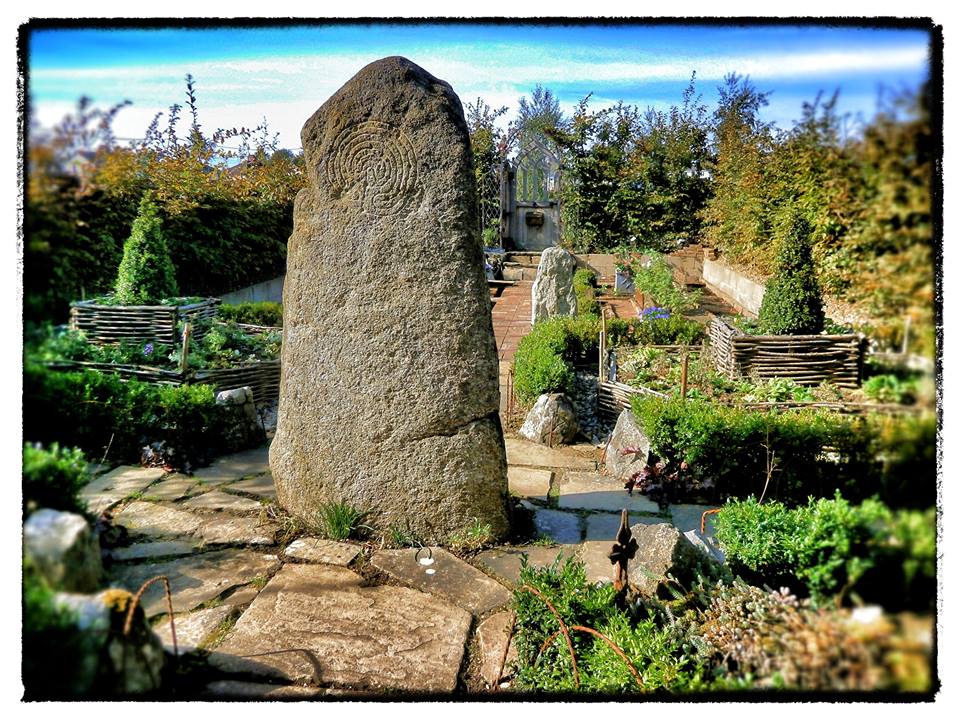
I realise I’m a bit late in posting this, but I thought I should update my blog readers – that wonderful vision of a house, Talliston, was saved from imminent sale and work continues apace to complete the artistic vision of John Trevillian and his merry team of transformers.

The campaign to save Talliston was unparalleled and gained coverage right around the world.

John originally bought the nondescript ex-council home 24 years ago and has since  spent £700,000 transforming the three-bed semi.

On July 27 John delivered two bits of good news – he has fundraised enough money to take the house off the market, and he also had a new job.

The next 12 months will be spent completing the rooms of Talliston for its 25th anniversary. Good luck guys!

10580889_10152583538839002_4420471467122103824_o